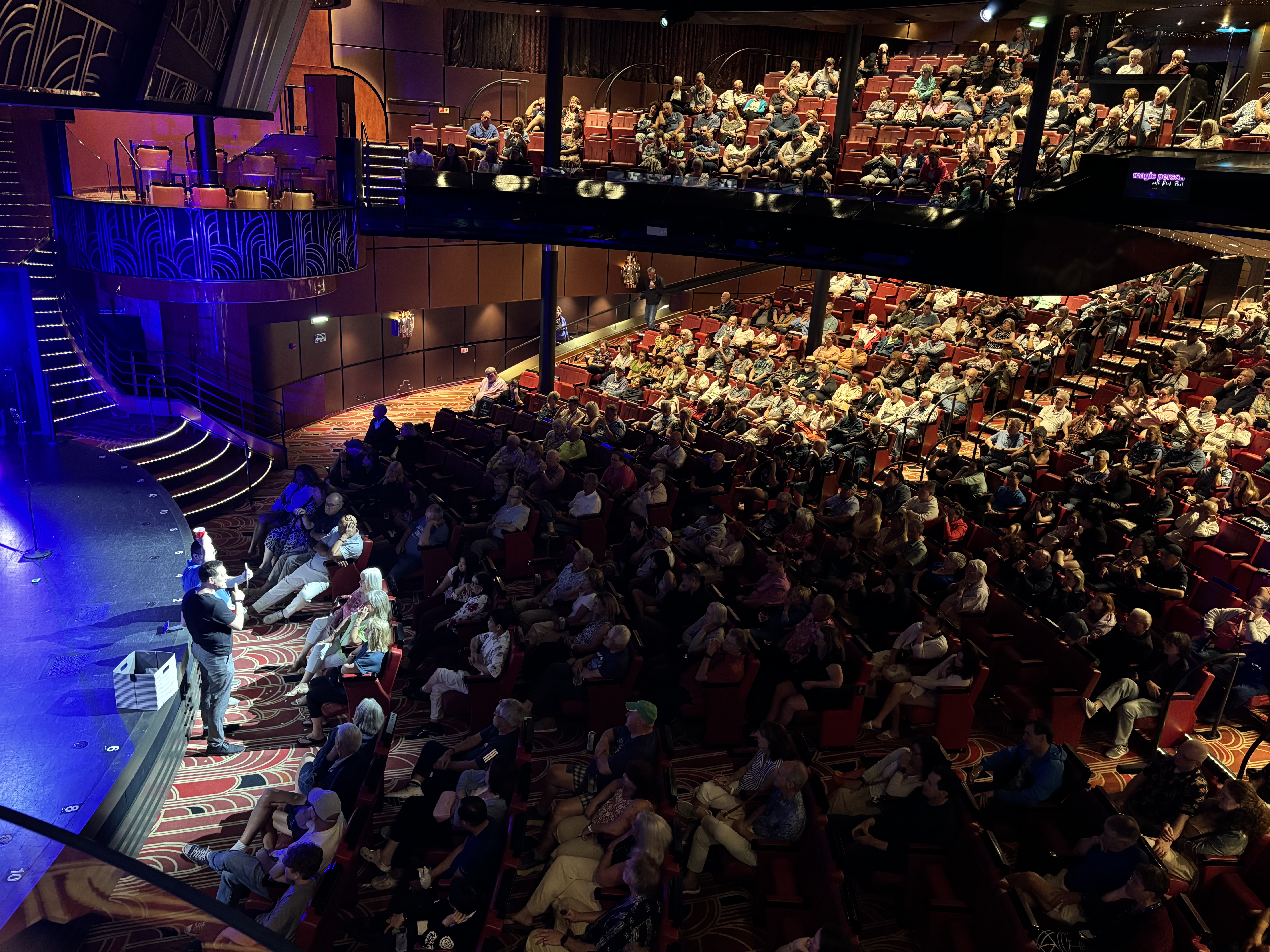
Guests see the show. They do not see the hours before it, which is where most of a good night is decided. Here is what happens before the first guest walks in.
Weeks out: learning the event
The show starts with a conversation with the planner. Who is in the room? What does the company do? Is this a celebration after a great year, or a team that needs a lift? Are there names, inside jokes, or recent wins worth knowing? That context shapes which pieces go in the show and how they are framed.
The venue gets a short tech sheet listing sound needs, stage requirements, and timing, so nobody is surprised the day of.
Arrival: walking the room
I arrive well before showtime. The first stop is the room itself:
- Sightlines. Where are the pillars, the bars, and the tables with a bad view?
- The stage. Size, height, steps for volunteers, and where the light lands.
- The path. How volunteers get up and back, and how I get on and off cleanly.
Sound check
The microphone is the most important prop in the show. A quick check with the AV team confirms levels, the wireless handheld, and any music or video cues. If the room has a dead spot, it is better to find it at 5 p.m. than at 8.
Syncing with the program
A final pass with the planner or emcee locks the run of show: who gives the introduction, the exact cue, and what happens the moment the show ends. If dinner is running late or speeches will go long, this is when the set gets adjusted.
Why it matters
All of this is invisible when it works. The audience just sees a show that feels effortless and made for them. That feeling is built in the quiet hours before anyone takes a seat.
Planning an event in California? Send your date, venue, and headcount to get started.
Leave a Reply