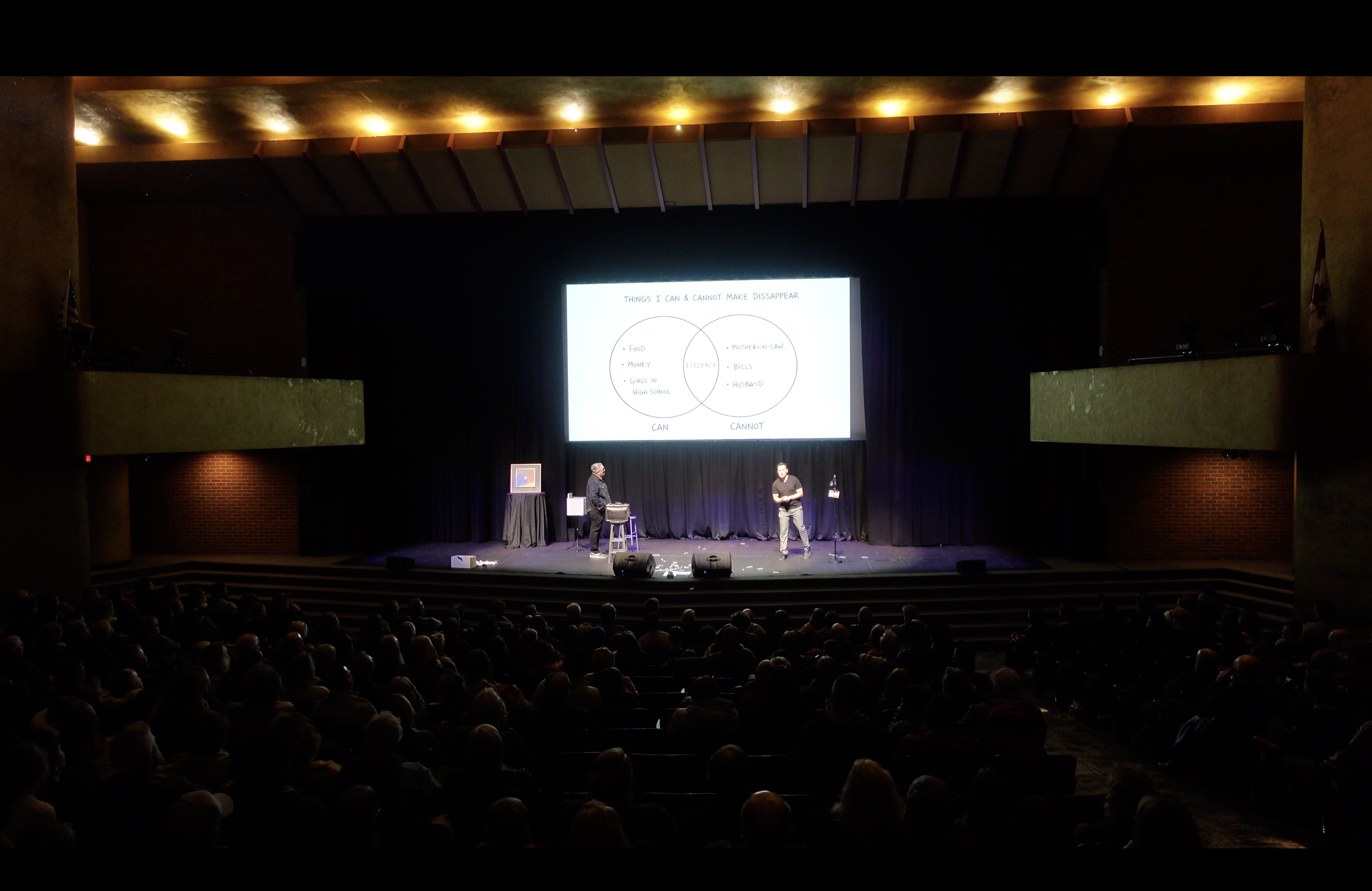
Performing on Penn & Teller: Fool Us and appearing on shows like CONAN and Netflix’s Magic for Humans taught me a lot. The biggest lesson was how different television is from a live room, and why a trick that works on camera often needs a new shape in front of 800 people.
The camera sees everything; the back row sees almost nothing
On TV, a close-up lens puts every viewer six inches from my hands. In a ballroom, the person at table 40 is a long way from the stage. Live material has to read from a distance: bigger moments, clearer reactions, and audience volunteers who become the audience’s eyes.
TV is edited; live is not
A television segment can be shot more than once and trimmed to the best few minutes. A live show gets one take. That means pacing has to be built in, not added later. It also means the unplanned moments, a volunteer’s surprising answer or a heckle from the CFO’s table, become some of the best parts of the night.
On TV, the audience is at home
The studio audience matters, but the real audience is watching on a couch. In a ballroom, the audience knows each other. They work together, they have inside jokes, and they will talk about the show on Monday. The best corporate shows use that: the people on stage are coworkers, and the laughs come from people seeing their colleagues in a new light.
What carries over
Some lessons from TV transfer directly:
- Respect the clock. TV segments run to the second. Corporate programs do too.
- Every moment needs a reason. If a beat does not add to the story, it gets cut.
- Clarity beats complexity. The strongest effects are easy to describe afterward.
If you saw a clip online and wondered how it would play at your event, the answer is that it will be adapted for your room, your audience, and your program. Watch more on YouTube or check your date.
Leave a Reply